

In summer 2024 we starting working with Southwark's Public Health Team on the Resident Health and Wellbeing programme - which became known as RHAW. The programme tested a collaborative design process to develop interventions to boost health and wellbeing and tackle the long-term aftermath of COVID-19. Social Life coordinated all the stages of the programme - this gave us a chance to reflect on how we support participatory design in the built environment.
RHAW focused on three large Southwark council estates - Kingswood in the south of the borough, Wyndham & Comber in Camberwell in the centre and Rockingham in the north, in Elephant & Castle. Our task was to understand communities' everday life and perceptions, failitate a design process with residents and support the projects and initiatives that emerged. We carried out a light touch evaluation to complete our end-to-end involvement.
As well as supporting much needed investment in communities' health and wellbeing - through community development and the RockiFest festival on the Rockingham Estate to three diffferent appraoches to tackling isolation and loneliess on the Kingswood Estate - the work gave us an opportunity to think about how we work wtih residents to develop ideas that have impact. We took time to reflect on participatory design in the built environment and draw on what we have learnt across other projects in south London and beyond.
Our starting point was that collaborative approaches to design are not new. The term “co-design” has emerged as a shorthand for a more involved process building on human-centred design principles that have evolved in the past century and that have become of greater interest to the public sector more recently. Co-design means designing with people, not for them. It is about fusing lived experience and expertise and professional experience to facilitate a process of mutual exploration underpinned by care, creativity and sharing power.
We went into the process with some caution. An alternative for the public health team would have been to draw on the evidence base for activities that impact health and wellbeing, and use this as the basis of commissioning services, without engaging residents in such an in-depth and resource-intensive way. A critical question was whether the investment in co-design generated enough value to compensate for the reduction in funding available for direct delivery, had commissioning decisions been made on evidence alone.
The parameters of sharing power
In any participatory design process, there needs to be a shared understanding of parameters and limitations. To build trust with communities transparency is essential from the start, this involves being open and clear about constraints. In the RHAW programme significant limitations flowed from the council's statutory responsibilities, other planned or current activities being delivered by estate-based services, shifting political priorities, limits to community capacity, as well as preferences for certain types of intervention (at all levels). There was a particular need to communicate the limitations imposed by the budget and procurement processes within a large and complex organisation.
Co-design processes aim to share power between partners to allow for transformational processes which need time and being present. The timing of this project was relatively tight, and the budget restricted how much time Social Life team and public health officers could spend on the three estates. However we still managed to invest intensive time at the start of the project in relationship building which was critical, our familiarity with the three areas and some stakeholders helped, we are based in Southwark and have worked across the borough in the past.
Our design process
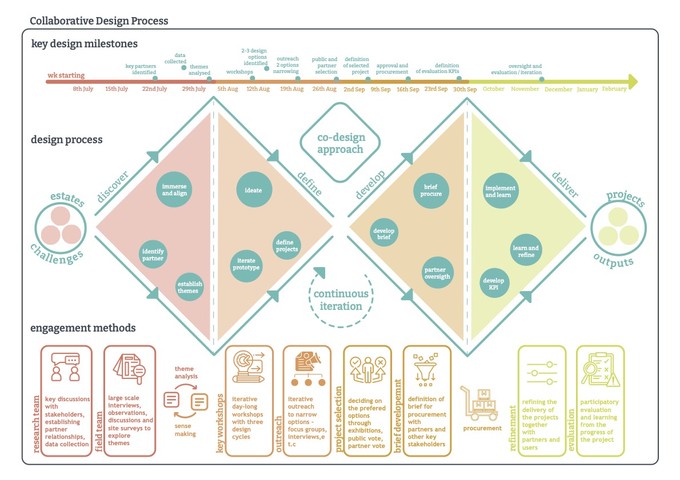
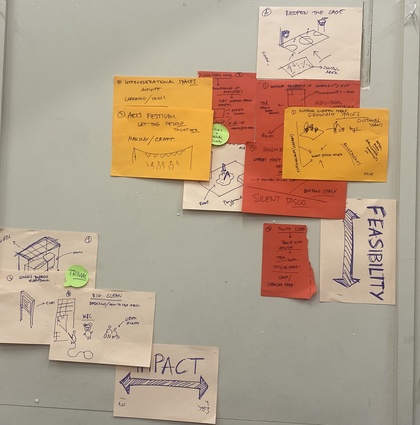
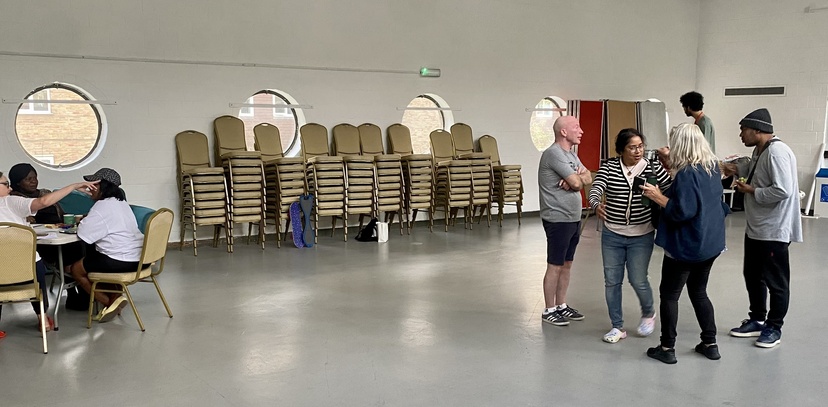
Within the design process we applied the principles of the double diamond. In the discovery phase our fieldteam spoke to residents and moved towards definition of the problem, analysing these conversations and feeding this information into workshops. Workshop design emphasised participation and was iterative and accessible to community members. We developed ideas through more outreach with residents who did (or could) not attend events and workshops. On each estate we idenified one or two key local partners who were compensated for their time supporting the programme. Our intention was to work closely with the core resident group for each estate and the local partners to deliver and evaluate the interventions.
Our model of care
The model of care sets out how we apply our co-design principles in practice:
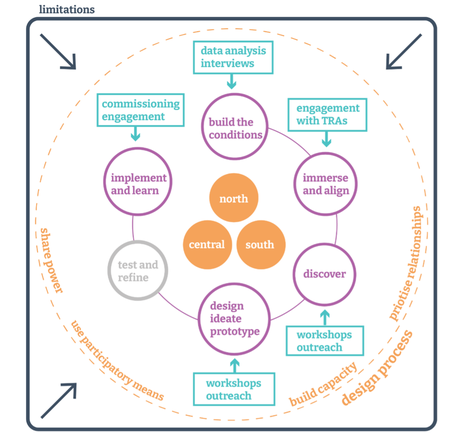
Our model of care: the collaborative design process and constraints that shaped the RHAW co-design approach. Thanks to Beyond Sticky Notes for their insights and inspiration in developing this.
The value of our approach?
Agencies and groups benefiting from RHAW funding recognised the value of intensive resident engagement and how this steered resources to existing initiatives that were in place, rather than bringing in new activities or providers. On Rockingham Estate in particular the funding created appetite for more activities and organisers believe that it has re-energised community life.In spite of the short length of project activities there is evidence of impact on health and wellbeing through community development activities and a large-scale community event – RockiFest - on the Rockingham Estate, and promising but small-scale impact from work to tackle loneliness and improve community connections delivered by Paxton Green Timebank on the Kingswood Estate.
We distilled what we learnt, to maximise Southwark’s investment in co-design, to support future initiatives across the borough. Our report includes a full list of transferrable lessons, key among these are to: